Headlines
- Click here to read audience comments on our season so far.
- Our new calendar links to your calendar. (Click + to add all events or just click on the event that you would like to add.)
Wait a minute! What about the films?
Keep scrolling down past all the stuff about blogs and calendars and tickets and you will find details of the next film in our 2026-27 Season (including a trailer and film notes) and a clickable list of the other films that make up Part One of the Season.
Welcome to Part One of our 2026-27 Season
We are delighted to present to you our autumn collection – a very diverse line-up of seven films carefully chosen to keep you entertained, stimulated and enthused between now and Christmas. All our films are shown at Picturehouse in Chester.
Tickets

Members can buy tickets in person from Picturehouse at the reduced rate of £5 per person. Non-members have to pay the full price (currently £10.85) and can buy their tickets from Picturehouse online or at the box office.
Our Next Screening
-
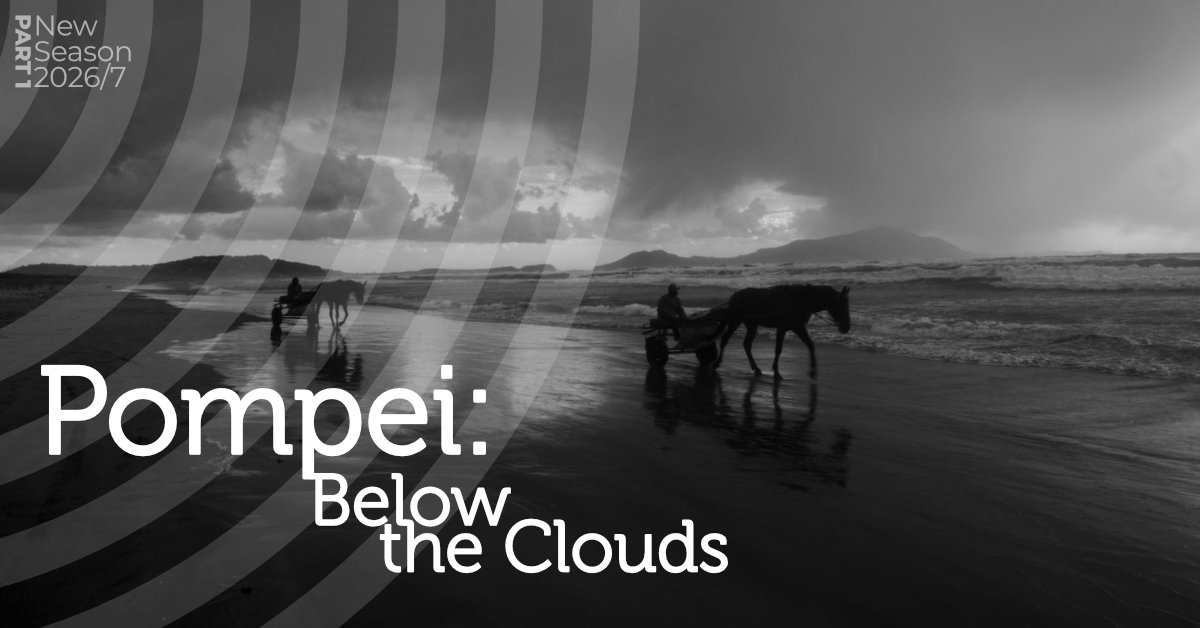
Pompei: Below the Clouds

(Original Title: Sotto le nuvole)
This striking, poetic black-and-white documentary observes the everyday rhythms of life in Naples as residents coexist under the constant volcanic threat of Mount Vesuvius. Seamlessly blending ancient memory with reality, it enthralled international critics and won the Special Jury Prize at the Venice Film Festival.
Scroll down, below trailer, for film notes (usually added shortly before screening).
15th October 2026, 7:30 pm
Picturehouse (Screen 1)
Italy
2025
1h 55m
Director: Gianfranco Rosi
Writers: Gianfranco Rosi, Carmelo Marabello and Marie-Pierre Muller
Matthew’s Film Notes
“I give you ‘dot dot dots.’ You put the word.”
–Gianfranco Rosi on Pompei: Below the Clouds (2025)
In an illuminating masterclass that took place at the ICA’s Frames of Representation festival in 2021, Gianfranco Rosi jokingly lamented that producing only six films in a career that, at that point, had lasted almost thirty years, was “not such a good result.” Since then, Rosi has added two more films to his oeuvre: In Viaggio (2022, often subtitled The Travels of Pope Francis) and Pompei: Below the Clouds (2025). In Viaggio might be considered something of a curio, given that it is uncharacteristically assembled from footage not shot by Rosi himself. Intrigued by Pope Francis’s visitations to sites that he himself had filmed, such as the island of Lampedusa for Fire at Sea (2016), Rosi curates a selective archive of Pope Francis’s speeches and public reception across the world, following the beginning of his pontificate in 2013. The film is deliberately repetitive, and flatly ambivalent in its presentation: Pope Francis may speak movingly of hope and solidarity as a bulwark against the excesses of contemporary capitalism one minute, then disregard a child sexual abuse scandal to defend controversial Chilean bishop Juan Barros the next (an allegiance Francis is soon seen rowing back on). Pompei: Below the Clouds (2025), by contrast, marks a return to Rosi’s more established practice of journeying to places with an approach entirely distinct from the pope’s flying visits: spending years in one place, gradually building relationships with a community, then constructing a film out of what reality might have come to pass in front of a camera.
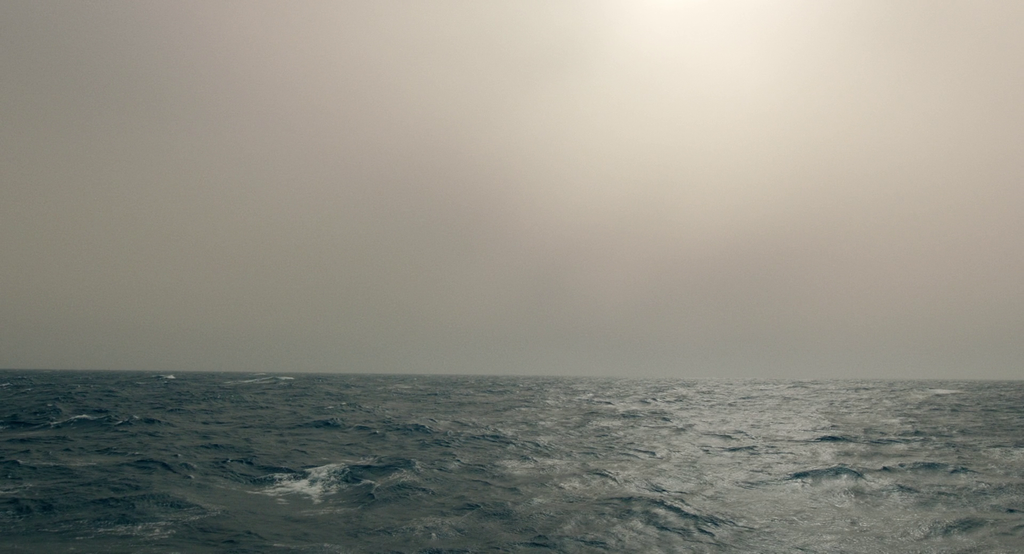
In Viaggio (Gianfranco Rosi, 2022) Rosi started out, if it is possible to conceive of seventeen years as the first phase of a career, making three quite different films “without a producer, with no money”: Boatman (1993), Below Sea Level (2008) and El Sicario, Room 164 (2010). Four years were spent making Boatman (1993), five years on Below Sea Level (2008), and only two days on El Sicario, Room 164 (2010). Of the latter, Rosi has joked that it is “a perfect film”, in the sense that “it cost $3000, [involved] two days of work, and it was extremely successful.” Taking place almost exclusively in a hotel room near the Mexico–United States border, El Sicario’s runtime is devoted to a retired hitman’s remembrances of twenty years of drug trafficking, cartel murder and torture. Again, the film is repetitive in its presentation, and at times deeply disturbing. Its budget mostly consisted of the payment demanded by the sicario for his participation, after he said to Rosi: “I used to ask $2000 to shoot people, but [now] I want $2000 for you to shoot me.”
Below Sea Level (2008), filmed in the U.S., bears the closest relation to the more widely distributed and acclaimed work of the second half of Rosi’s career: Fire at Sea (2016), Notturno (2020) and Pompei: Below the Clouds. Whereas Rosi often likes to focus on a state institution as an anchor to his documentaries—the Fire Department in Pompei: Below the Clouds, the Navy in Fire at Sea, the ambulance service in Sacro GRA (2013)—Below Sea Level depicts a makeshift society of outcasts deep in the Californian flatlands, where there is no institutional presence whatsoever: no policemen, no fire and rescue service, no electricity or running water, only individuals. A place where, “if you make a mistake, you’ll pay for it.” The people making their way through this marginal world are, variously, spiky, obstinate, funny, articulate, wise, and replete with trauma. Spending years in their company affords Rosi a level of access and intimacy that can be startling; at one point, a character not-so-affectionately known as “Insane Wayne” gets laid on camera. Rosi couldn’t secure a screening of Below Sea Level in its native America for two years after its completion in 2008, attributing this to its unwelcome focus on poverty and marginalisation in an era of blind liberal hope. Barack Obama had just been elected as president, and it would be a while before Nomadland’s much more sanitised depiction of a similar itinerant world picked up the Academy Award for Best Picture in 2021.
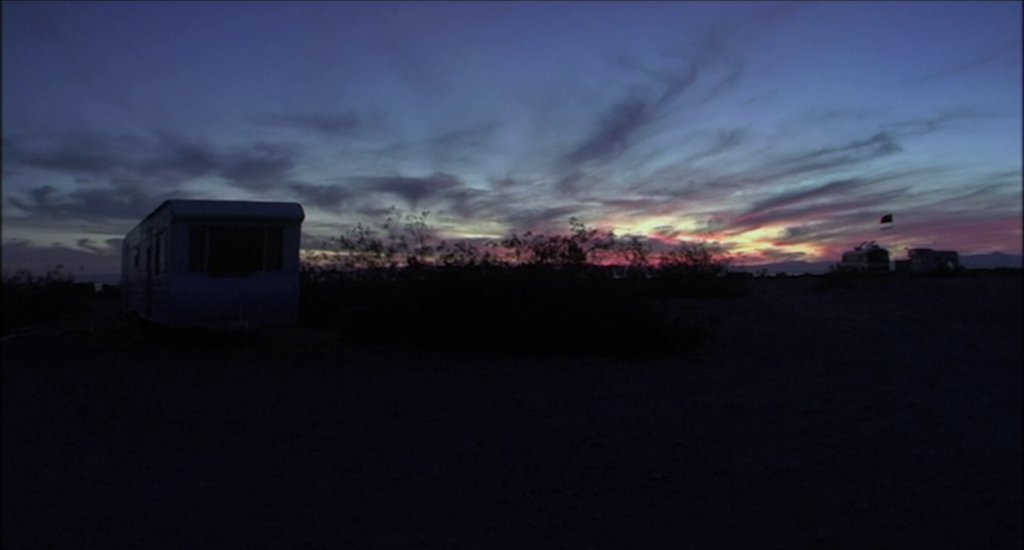
Below Sea Level (Gianfranco Rosi, 2008) Rosi has intended his filmmaking practice to inspire younger filmmakers who lack financial means. Working alone with a single camera, without a budget, producer or script, gave Rosi “incredible freedom” in the first half of his career. A turning point came with the opportunity to make Sacro GRA (2013), the first time he would accept a salaried assignment. Finding himself coming out of a divorce in his mid-forties, and encouraged by his ex-wife to stay near Rome to be close to his daughter, Rosi broke with a previously-held conviction that “people should not be paid to make a film.” Rosi perceived steps toward raising funds as prescriptive, foreclosing the shape a film may take: “If you don’t write a film, it’s impossible to have a budget for a film… I always thought that writing a documentary was like starting with a lie. I always refused to pitch my film, as I didn’t know what my film was going to be.”
For Sacro GRA, Rosi lived in a campervan for three years, slowly collecting impressions of the area surrounding the Grande Raccordo Anulare, the 70km-long ring road that encircles Rome. Later, the filming of Pompei: Below the Clouds would take roughly the same period of time, with a break in the middle to edit the aforementioned In Viaggio (2022). Pompei: Below the Clouds is something of a blockbuster production for Rosi, involving a crew of two! An assistant, Alberto Landolfi, joined Rosi initially as a location scout: “Naples is a huge territory and you need to have a guide. He was able to take me around and help me discover places.” The geographic span of Pompei: Below the Clouds is broader than the ancient city of its title, taking in many aboveground, belowground and maritime sites in the surrounding Naples area. The structure of the film is quite allusive, encouraging the viewer to make connections between observations and events, filling in the blanks by almost participating in the film’s construction. Common anchor points of mainstream documentaries are absent: there is no voiceover commentary, no talking heads, no efforts to create or evoke suspense, and no sense of ‘character’ arcs experienced by participants or subjects. The viewer is granted a freedom to roam around in time, in a manner not dissimilar to Rosi’s shooting practice itself. The result of this approach is an unusually patient, deliberate, perhaps slightly sombre, film.
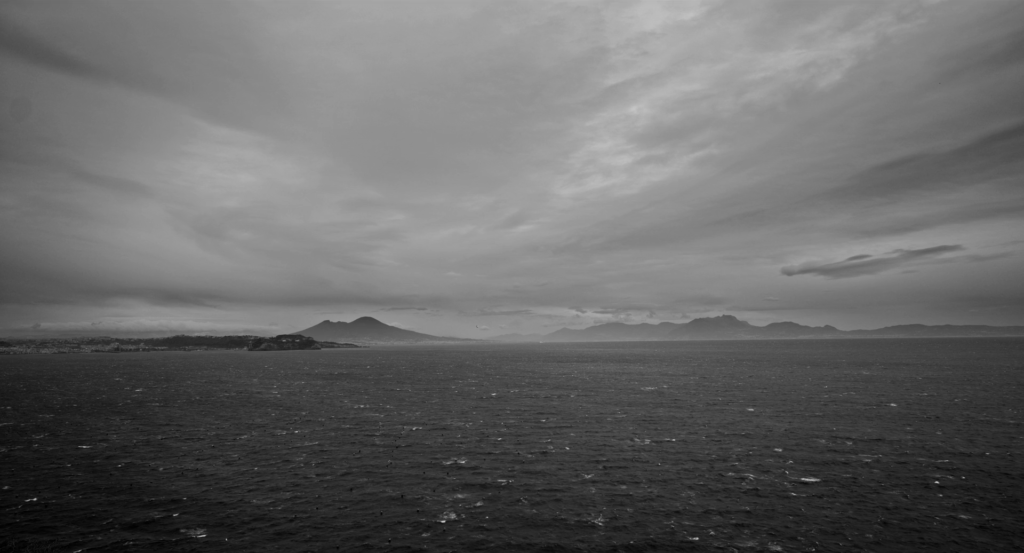
Pompei: Below the Clouds (Gianfranco Rosi, 2025) An investigation into underground tunnels dug by tombaroli, grave robbers who will be familiar to anyone who saw Alice Rohrwacher’s La chimera (2023), initially provides a loose map to the territory. The scale of the amateur tunnel excavation is breathtaking, said to resemble “an enormous open-cut mine”, a “veritable highway”, and the extent of archaeological theft might be considered to be of a similar magnitude. The spine of Pompei: Below the Clouds emerges from the time Rosi spent at the local Fire Department’s emergency call centre. After obtaining a permit and gaining the trust of the call handlers, Rosi spent so much time filming in the room that “the people who worked there became almost like family. I cooked there, sometimes even slept there!” Over the course of three years, he shot enough material at the location to make another film entirely. The generosity, openness and patience of the call handlers is as striking as it is moving. Rosi remarks, “I think if we had an Army like the Fire Department it would be fantastic; if the only Army allowed was the Fire Department, it would be the most beautiful; the world would probably be different…”
Other sections came about by pure happenstance: whilst exhibiting In Viaggio in Japan, Rosi was told about the presence of a long-running excavation on the northern slopes of Mount Vesuvius, funded by the University of Tokyo since 2002. The cavernous pits, extensive scaffolding and painstaking work of discovery around the site contribute to one of the most memorable strands of the film. N.B. The University of Tokyo is currently welcoming donations to keep the project running!
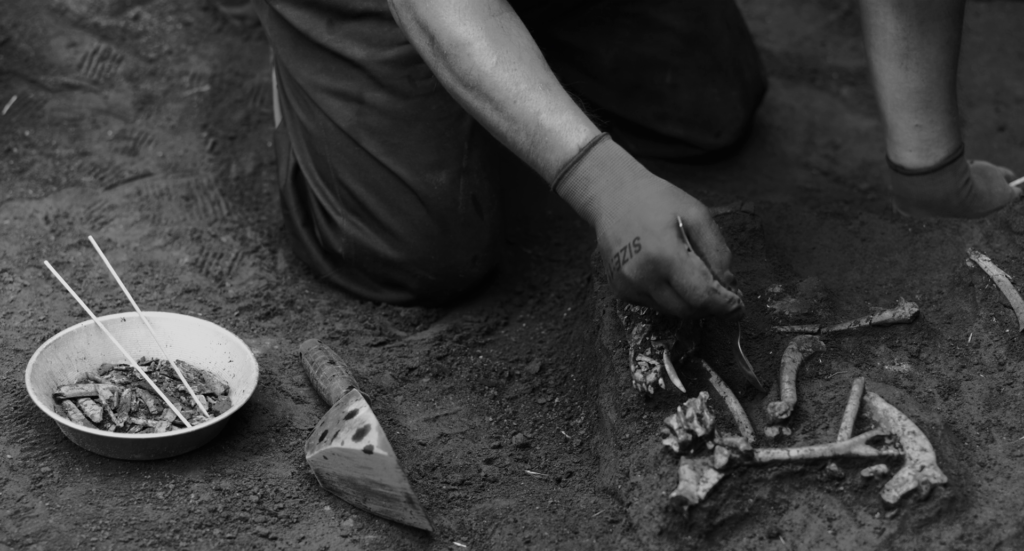
The University of Tokyo’s Somma Vesuviana Excavation Project in Pompei: Below the Clouds (2025) As in the previous film in our ‘26-27 season, Sirāt (2025), societal unrest and the spectre of geopolitical conflict intrudes upon a more remote or peaceful present. Reports of arson and scenes of youth unrest are accompanied by reflections from Syrian seafarers about the danger of their journey to Odessa, a transition from the “beautiful city” of Naples to a site of “non-stop bombing”. Radio broadcasts, as in Sirāt, relay the distant news of fatalities from Russian air strikes; an afterschool tutor, Tutti, reflecting on a Futurist poem by Filippo Tommaso Marinetti, adds, “Damn war, goddamn it, always the same old story.”
Unusually, Rosi filmed Pompei: Below the Clouds in native black-and-white, with a monochrome chip in the digital camera so colour would not be registered, or be visible through the viewfinder. This produces a profound and beautiful greyscale, alongside deep, inky blacks. Contemporary black-and-white films are more often than not shot in colour then post-converted to monochrome, and avoiding this route created certain difficulties during production. Rosi had to learn to look in black-and-white, and wait for just the right light. Clouds are prominent throughout the film, for good reason. Rosi could not shoot under the bright light of the sun as the camera’s sensor would generate too much contrast, so he had to rely exclusively on shades of grey: “The clouds are my companion when I film… If there is a day of sun I either go inside or stay in my hotel, or I wait and I wait for the right light…”
An abiding impression one might take away from Pompei: Below the Clouds is of its abundant displays of care. This is visible in the way historical artefacts, considered “friends”, are studiously inspected and preserved; in an afterschool tutor’s diligence and gentle persistence with distracted students; the considered, non-judgmental responses to emergency calls from anguished members of the public; the sight of an archaeologist gingerly uncovering ancient bones. The ways in which we approach the present, the past and each other are in constant dialogue throughout Pompei: Below the Clouds—it’s telling that the film’s present is already in archival black & white, suggesting that our negotiations with time will often be lost, and there is a need to invest in the present moment. “At the end of the film,” Rosi concludes, “I would like the viewer to ask themselves a question, ‘Is there still hope?’ Sooner or later, our civilization will be submerged like the Roman statues in the last part of the film. The question for me with that image, when everything becomes blurry and everything disappears, is, ‘What have we left behind?’”
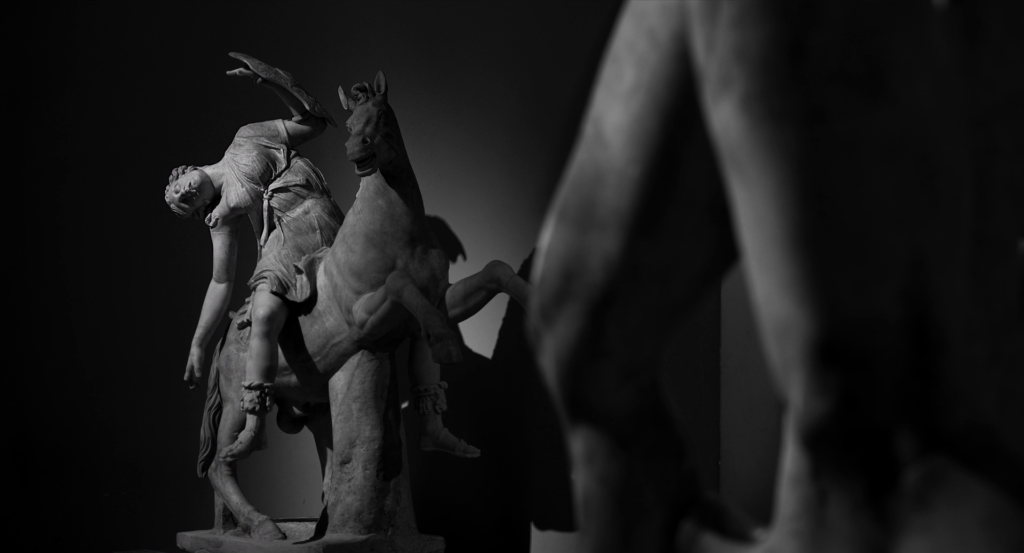
Equestrian Statue of an Amazon (Roman copy of Greek original) in the National Archaeological Museum of Naples, Pompei: Below the Clouds (2025)
Coming Soon
More from Part One of our 2026-27 Season: