Headlines
- Click here to read audience comments on our season so far.
- Our new calendar links to your calendar. (Click + to add all events or just click on the event that you would like to add.)
Wait a minute! What about the films?
Keep scrolling down past all the stuff about blogs and calendars and tickets and you will find details of the next film in our 2026-27 Season (including a trailer and film notes) and a clickable list of the other films that make up Part One of the Season.
Welcome to Part One of our 2026-27 Season
We are delighted to present to you our autumn collection – a very diverse line-up of seven films carefully chosen to keep you entertained, stimulated and enthused between now and Christmas. All our films are shown at Picturehouse in Chester.
Tickets

Members can buy tickets in person from Picturehouse at the reduced rate of £5 per person. Non-members have to pay the full price (currently £10.85) and can buy their tickets from Picturehouse online or at the box office.
Our Next Screening
-
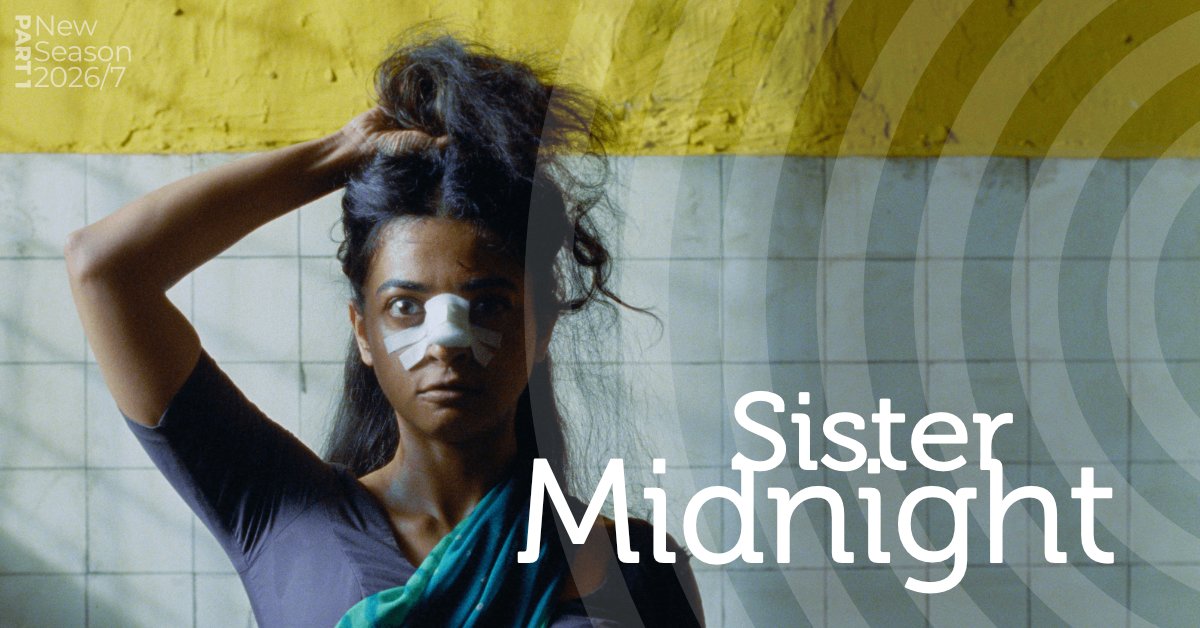
Sister Midnight

This audacious, surreal satire follows a misanthropic newlywed completely unsuited to an unhappy arranged marriage in Mumbai. Embracing her feral impulses, she wreaks havoc on traditional expectations.
Scroll down, below trailer, for film notes (usually added shortly before screening).
29th October 2026, 7:30 pm
Picturehouse (Screen 1)
India
2024
1h 47m
Director: Karan Kandhari
Writers: Karan Kandhari
Starring: Radhika Apte, Ashok Pathak and Chhaya Kadam
Matthew’s Film Notes
Sister Midnight (2024) is the debut feature by British-Indian director Karan Kandhari, a Londoner born in Kuwait who has now taken to depicting a side of India rarely seen in movies. Intoxicated by a period of time spent in the city of Mumbai (Kandhari still refers to Bombay in interviews) during his twenties, Kandhari came up with the idea of a misfit character plunged into a larger-than-life urban environment, letting the idea percolate for ten years. Sister Midnight then took yet another ten years to get made, thanks to an open-minded funding allocation by Film4 and the BFI, and has the air of a long-gestating project where every framing and editing decision has been carefully considered and executed with hard-won precision.
Set in a colourful, vibrant and chaotic working-class district of Mumbai, Sister Midnight, in Kandhari’s words, is the story of “a small-time misfit who becomes an accidental outlaw”—a subversive, spiky, digressive romance in reverse. A young newly-wed couple, ex-childhood sweethearts, are introduced at the end of a train journey during the opening credits: one, Radhika Apte’s Uma, sits bolt upright like an unmoving ornament; by her side slumps her husband, Ashok Pathak’s Gopal, an unsuspecting sad sack about to find himself in the eye of a hurricane. Not long after Uma takes in her first view of the city through the carriage window, the newly-weds find themselves in a boxy one-room dwelling on an often-busy city street, ready to spectacularly fail at building a functioning domestic household from scratch.
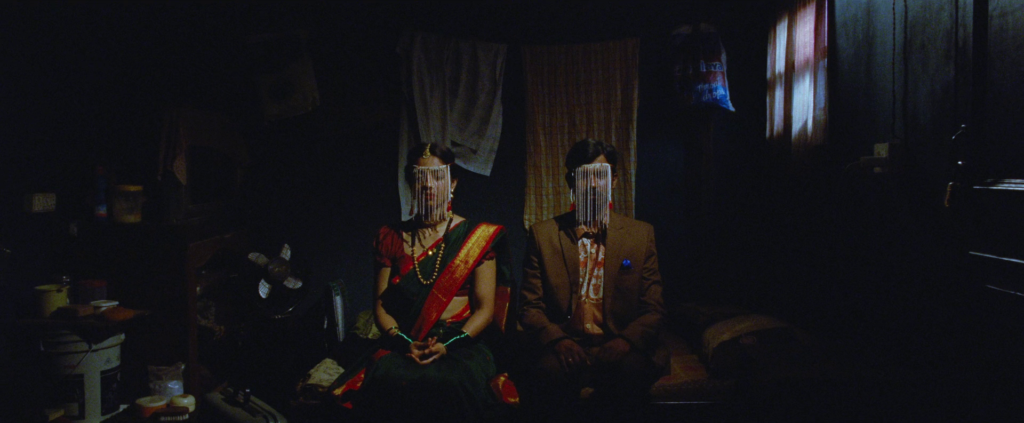
Radhika Apte and Ashok Pathak in Sister Midnight (2024) Ashok Pathak, throughout, remains shy, hapless and avoidant, but his barely-readable character retains a quiet, mysterious masculinity. Radhika Apte’s performance, on the other hand, is a force of nature, exhibiting a level of physicality and expressiveness that recalls the magnified performance style of cinema’s silent era. Kandhari has noted that he saw echoes of Buster Keaton and Toshiro Mifune in Apte whilst filming, and must have thanked his lucky stars for being able to achieve such a feat of casting. It is surprising that Uma’s startling lack of verbal discretion—her husband Gopal at one point exclaims, “I’ve never met a woman with such a filthy mouth!”—is eclipsed by the entirely non-verbal aspects of her performance: a procession of sudden, staccato movements and autonomic slapstick reactions that suggest her body is reacting to its environment faster than her mind. Kandhari says, “I still find wonder and inspiration in early silent cinema; it’s almost like sound came too early for my liking. Who knows where the artform could have gone if we’d stuck to it.” Believing that the grammar of cinema belongs only to cinema, Kandhari’s aim has been to use it to its full effect not merely through framing or sound design but through body language and behavioural disclosure: “What Radhika does in the film is express and communicate many pages of information through the subtlest muscle movements, and to me, that is cinema.”
This nod towards a bodily physicality reminiscent of silent cinema soon segues into a wide-ranging display of things that one can do to one’s body, or what the body can do to oneself: impulsive consumption, fainting, fever, diarrhoea, masturbation, sudden violence, sex (“show me your bones!”) and, eventually, (in)organic decomposition. The film becomes, as Kandhari has noted, like a Pixies song: a structure of loud quiet loud quiet loud quiet, with Apte’s performance choreographed musically to fit this rhythm. One of the film’s many surprises involves the introduction of stop-motion animation, with a nod to the work of Ray Harryhausen. Apte’s performance starts to mirror the animation’s uniquely askew, eccentric quality as the film draws to an uncertain, rather than cathartic, conclusion.
Kandhari has said that Sister Midnight is “about loneliness”, about life not bequeathing a manual to be a man, a woman, a husband, a wife. “It’s a meditation on inexperience, on being inherently strange and not really knowing how to handle it or be at peace with it,” Kandhari continues: “How do you, as a person who doesn’t fit in, embrace your outsider-ness and refine things inside you that could be considered a hindrance but are actually a strength?” As Uma and Gopal appear to find a tentative harmony with each other, an unexpected tragedy ensues, eventually leading to Uma’s ostracisation from society, forcing her to forge her own path forward. Perhaps, at this juncture, she does find a little more peace with herself. But what makes Sister Midnight valuable is its status as a film for misfits, for outsiders, those who struggle to find harmony within themselves in the face of the unblinking expectations of societal norms. Life’s challenge might be to embrace what difficulty makes you unique, to find a way to assert your difference and wield its strength. Uma puts it succinctly, when redirecting the expectation of settled behavioural conformity to those who are rounding on her: “It’s hard being human; what’s your excuse?”
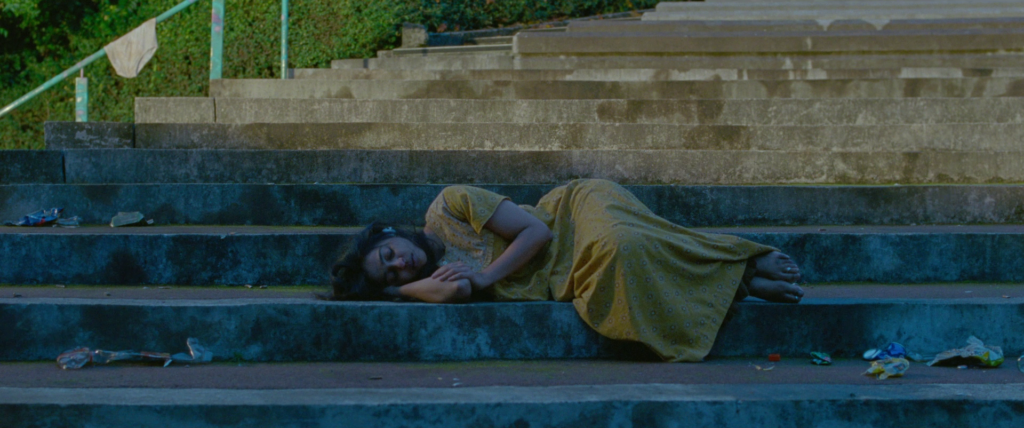
Radhika Apte in Sister Midnight (2024)
Coming Soon
More from Part One of our 2026-27 Season: