
Matthew’s Film Notes
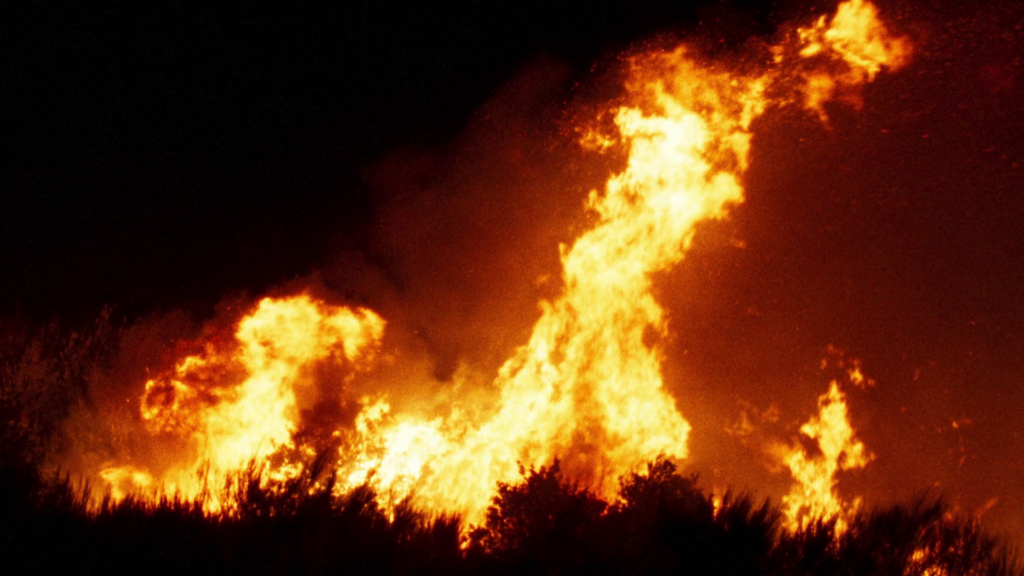
Director Oliver Laxe is developing a habit of channelling the tumultuous energy of the present moment into his films. His 2019 feature Fire Will Come tells of an arsonist returning to his hometown in Galicia after a stint in prison, and features extraordinary footage of uncontained wildfires raging through the night. Laxe, his actors and crew had to train as firefighters to safely film amidst these forest fires, an approach that was particularly necessary at night, as visibility declines and risk increases sharply (Laxe observed at the time, “now, if it doesn’t work for me as a filmmaker, I can be a firefighter [Laughs]”). Watched in the summer of 2026, as record-breaking heatwave temperatures caused extensive wildfires to spread across France, Greece and Spain, Fire Will Come appears prophetic: it vividly captures an emergent ecological reality.
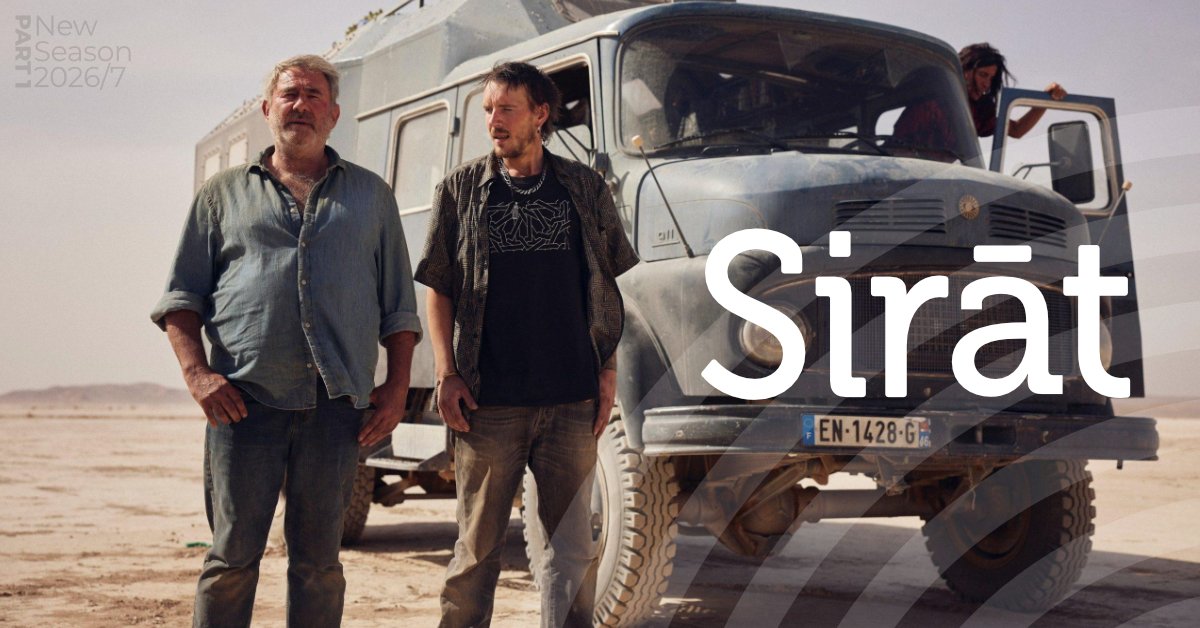
Sirāt continues this tendency, but will hopefully not prove quite so prescient: it is set largely in the Moroccan desert, an arid landscape of “nothing but dirt,” as World War III breaks out in the unseen distance. In the foreground, Sirāt focuses on an immediate quest: a father (Sergi López) and son (Bruno Núñez Arjona)‘s search for their missing daughter/sister, a raver who has vanished while travelling with a transnational ‘free party’ community, hopping from one illicit event to the next. During the film’s initial, limited theatrical release in the United States, Laxe published a message asking critics and viewers not to divulge any spoilers to fresh audiences, so further plot detail will duly be withheld here.
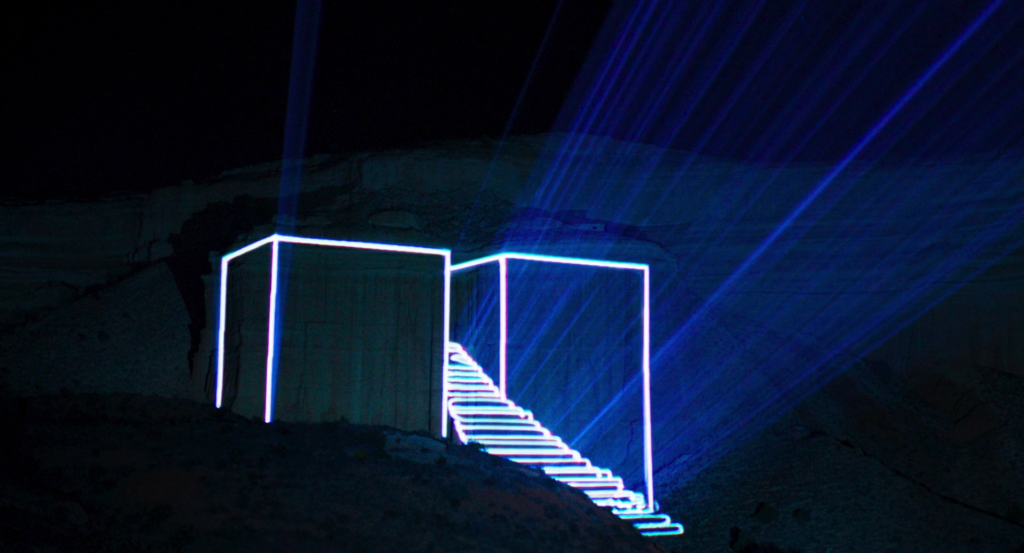
Sirāt opens with its key attributes front and centre: a reverb-heavy, distorted techno soundtrack (that will later ‘dematerialise’, by design, into a more otherworldly soundscape); grainy analogue Super 16mm photography; and a sparse, minimalist approach to storytelling. Its opening scenes plunge the viewer into the midst of a three-day long party that was not faked for the camera, a “pretty crazy” event according to composer Kangding Ray: “I can tell you it was a proper rave, so what you see on screen has a kind of documentary realism to it.” Ray, after finishing most of the music for the film before shooting commenced, played a long set on one of the nights, and appears in a brief cameo role as the military arrives to shut the party down. News of the onset of war is relayed by radio broadcast, and geopolitical catastrophe begins to weigh heavy in the air. One of the characters will eventually ask, ”Is this what the end of the world feels like?” Only to receive the reply, “It’s been the end of the world for a long time.”
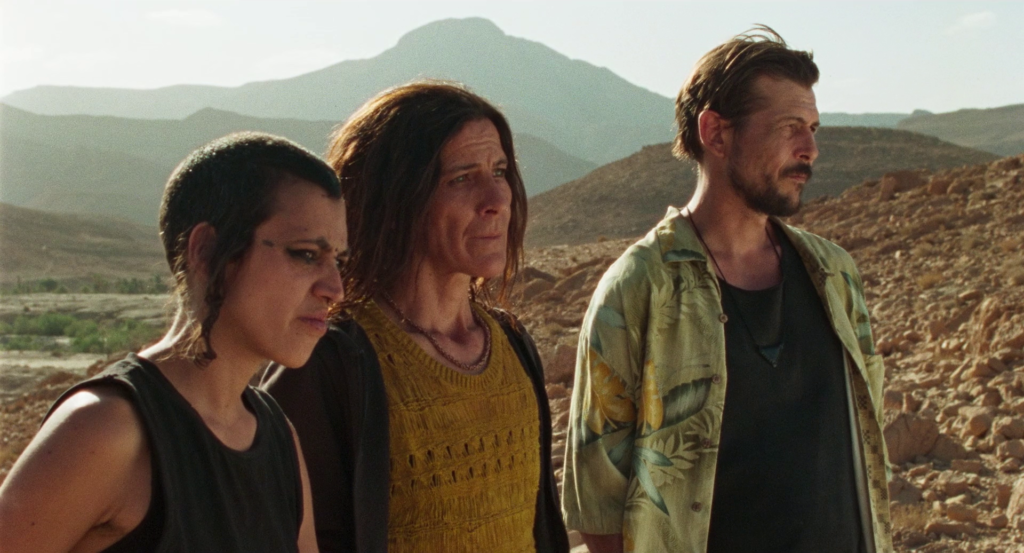
Contemporary cinema is often crying out for a realism of the body, which the elemental look and feel of Sirāt delivers: missing limbs, weathered skin and imperfect teeth replace the manicured cosmetics of less off-grid productions. Continuing a tradition Laxe has adopted in all his feature films, five non-professional actors accompany lead actor Sergi López, blurring the boundary between fictional storytelling and the non-fictional presence of an existing community.
A highly informative article by Ben Kenigsberg in The New York Times details the backgrounds of some of these non-professional actors, who were discovered through a guerilla casting process led by Laxe’s costume designer and former partner, Nadia Acimi, drawing from the rave culture that she herself has been a part of:
The unforgettable Jade Oukid, 38, from France, was found by Acimi in a crowd of 10,000 at a festival in Portugal. Oukid describes herself as a photographer, an amateur filmmaker and a seamstress who works with vegan leather; her dog Pipa features in Sirāt, alongside canine castmate Lupita. Pipa sadly died just after filming concluded, but was posthumously awarded the prestigious Palm Dog Grand Jury Prize for her contribution, and a heartfelt tribute was paid to her during the awards ceremony. Oukid’s scepticism about the historic pitfalls of participating in projects that portray rave culture from the outside, and a concern about the colonial implications of visiting North Africa to film, had to be overcome for her to take part.
French municipal street festival performer Tonin Janvier, 42, was able to draw on his familiarity with African terrain: he toured in Mali, Senegal, Ivory Coast and Guinea as a child in a travelling theatre family, and more recently spent six years selling old French vehicles in Mali and Senegal. “I’ve been through things that were even more perilous than in the film, and yet I’ve made it,” he says, referencing a motorcycle collision that has left more than a visible scar: “I’m still alive — I do have a leg missing — but I’m still here.”
Stefania Gadda, 50, from Italy, came to the film from life “in the fields,” without electricity or running water on a ranch near Granada, Spain: “I feel I’m more of a peasant than I am a raver,” she has disclosed. As the nonprofessional actors were initially unsettled by the presence of the camera, Laxe had to work on building their confidence for an unconventional shoot that took place in, at times, harsh conditions of “intense heat and dust”. The actors spent time living at Laxe’s home in Galicia (in northwestern Spain), cooking together, taking walks and rehearsing, whilst at times reawakening rave culture’s pastime of heavy drinking and eschewing a normative bedtime. The resultant close bond between the actors is palpable in the finished film.
What might, unexpectedly, tie Sirāt to the previous film in our ‘26-27 season, A Private Life (2025)? That the act of immersion in the film’s narrative, images and sounds can become a spur to self-discovery. Laxe feels that Sirāt is “a healthy film,” that its shocks and upsets provide a means for viewers to break through to a different level of perception and emotion, in a manner almost similar to what a psychotherapist might try to achieve. Laxe has been studying psychotherapy, but has said psychological categories don’t readily translate to the language of cinema, as “the way that cinema can capture the soul of a human being and their wound is precious and really particular.” The characters in Sirāt remain purposely undeveloped, in order for the film to show “their vulnerability through images.” As viewers, we are encouraged “to look inside” and re-encounter our own pain inside ourselves, as the pain of the world in which we live continues to unfold around us.
Audience Comments
- Tedious melodrama, waste of money and time making it.
- Amazing, visceral, extraordinary, WOW!
- A rich sensory experience. Absolutely superb!
- Brilliant! Music was hypnotic, acting great, scenery something else
- Best film I have seen in a while. I even liked the music, much to my surprise
- Great soundtrack! Reminded me of Wendy Carlos (obvs). A mythic journey through Hades?
- Enjoyed it. Unusual and brilliant film, thought provoking. Need to discuss.
- One of the most shocking, unexpected films I have seen, compelling. P.S. Although not sure why they didn’t follow their tyre tracks back the way they came to avoid the mines!
- A true journey into hell. The minefield scenes were so very tense and hard to watch.
- Ridiculous storyline, clumsy unconvincing script
- Very tense, acting excellent
- Bleak but I am sure I will continue to ponder on this film.
- Unsatisfying
- Shocking, thought provoking and enigmatic
- What a horrible film. Shocking
- Too shocking for me
- Weird
- I’d imagine it’s difficult to make a movie so I’d like to give the filmmakers the benefit of the doubt…. not today sorry
- Different but enjoyable
- Tense and brutal, absolutely desolate. At a certain point the brutality felt senseless and I didn’t feel for the characters as much as I should have, they felt underdeveloped and hollow.
- Contemporary, abstract. Graphic landscapes and night amazing. Probably need paracetamol to see it. Quite shocking the way things work out. Felt they ran out of actors at the end!
- Too stressful
- So weird. Absolute mess. But also somehow captivating. It all literally blew up.
- I don’t understand
- Tense tragic and no resolution
- Interesting, shocking and depressing
- You never know where life will take you.
- Not sure, started off really well and I thought it was very original until the end when mines started and I thought it got a bit ridiculous. Or maybe I didn’t get the metaphors.
- Bleak and distressing
- Amazing sound design. Felt like a combination of Climax and Sorcerer. But the plot and direction felt forced and meandering
- Not sure what they was about! Scenery amazing, music terrible.
- Bit slow to start, but picked up and took quite a dark turn. Probably more enjoyable 20 years younger and under the influence.
- Engaging! Gruelling!
- Sandy
- Very intense film. Amazing music and scenery. Terribly sad, traumatic.
- Gripping and deadly
- Stunning visually and emotionally. Great music, frustrated at start with incompetent dad but he came good in the end!
- Just shocking! Such an amazing work, humane
- Hypnotic and mystical, we were all on the bridge as fine as a hair and sharp as a sword.
- WOW