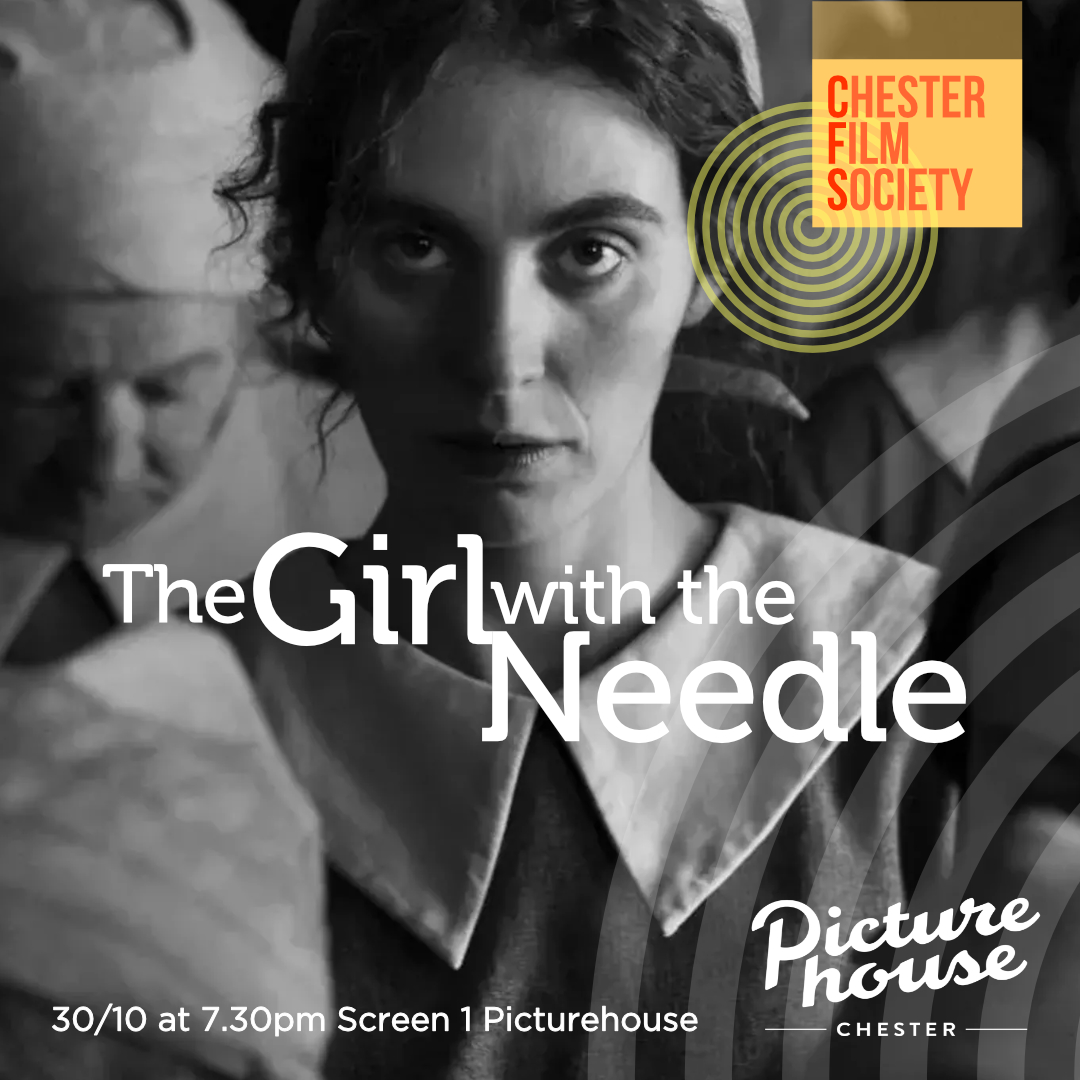

Synopsis
Set in post-WWI Copenhagen, The Girl With The Needle follows Karoline (Vic Carmen Sonne), a young factory worker who finds herself unemployed, pregnant, and alone. She is drawn into the orbit of Dagmar (Trine Dyrholm), a charismatic woman who runs an underground adoption agency. As Karoline becomes a wet nurse for Dagmar’s clients, a disturbing truth begins to unravel. Inspired by a real-life case that shocked Danish society, the film explores the fragile line between care and exploitation, culminating in a chilling revelation that reshapes Karoline’s understanding of motherhood, trust, and survival.
Context and Craft
Magnus von Horn (Sweat, The Here After) crafts a Gothic psychological horror rooted in historical trauma. Co-written with Line Langebek, the screenplay avoids sensationalism, instead focusing on Karoline’s emotional collapse. Michał Dymek’s cinematography evokes a bleak, claustrophobic Copenhagen, with muted tones and shadowy interiors that mirror Karoline’s isolation, which is further heightened by Frederikke Hoffmeier’s haunting score. Drawing thematic parallels to The Piano Teacher, the film interrogates systemic cruelty and moral ambiguity.
Critical Reception
Premiering in competition at Cannes 2024, The Girl With The Needle was Denmark’s submission for Best International Feature at the 97th Academy Awards. It received widespread acclaim for its performances and direction, though some found its subject matter overwhelming:
- “A masterclass in sustained dread, anchored by Vic Carmen Sonne’s devastating performance.” — RogerEbert.com
- “Von Horn’s refusal to center the killer makes this a story about complicity, not monstrosity.” — TIME
- “A film that numbs with its brutality, yet lingers with its moral complexity.” — Cahiers du Cinéma
Conclusion
The Girl With The Needle is a harrowing meditation on vulnerability, power, and historical violence. By centring Karoline rather than the infamous Dagmar Overbye, von Horn reframes the narrative as one of systemic failure and personal reckoning. The film’s austere style and emotional restraint challenge viewers to confront the horror not in spectacle, but in silence. As with our last film Misericordia, this is cinema that refuses easy catharsis, instead offering a stark portrait of human darkness shaped by circumstance
Audience Comments:
- Excellent – how much can one woman endure?
- Harrowing, amazing, acting.
- Gripping and disturbing.
- Black and white very effective.
- Interesting. Shocking twist
- Frightening
- Beautifully made.
- Pretty bleak subject matter!