

Season: 2025-26 Season (Part One)

  • The Marching Band

    The Marching Band

    Synopsis

    Acclaimed conductor Thibaut, diagnosed with leukaemia, discovers he was adopted and seeks a bone marrow donor. His search leads him to Jimmy, a long-lost brother who works in a factory
    cafeteria and plays trombone in a small-town marching band. Their reunion unfolds against the backdrop of industrial decline, as the brothers navigate class divides, family secrets, and the
    healing power of music. What begins as a medical necessity evolves into a fraternal journey of reconciliation and shared passion.

    Context and Craft

    Director Emmanuel Courcol, known for Ceasefire (2016) and The Big Hit (2020), continues his exploration of social realism and human connection. The Marching Band blends comedy
    drama with musical elements, using the metaphor of ensemble performance to highlight themes of solidarity and resilience. Courcol’s restrained direction and Maxence Lemonnier’s
    cinematography emphasize contrasts between the grandeur of orchestral halls and the intimacy of small-town life. The film reflects contemporary French anxieties about industrial
    closures, while celebrating music as a universal language bridging social divides.

    Critical Reception

    Premiered at Cannes 2024, The Marching Band was praised for its warmth and accessibility:

    • Variety: “A heartfelt fraternal drama… music as reconciliation across class and circumstance.”
    • The Hollywood Reporter: “Engaging blend of social realism and musical metaphor… Courcol’s most audience-friendly work yet.”
    • Film Review Daily: “Thoroughly engaging… designed for wide popular appeal, balancing sentiment with sharp observation”.
    • The Observer: “lived-in performances from an engaging cast of French character actors… a closing sequence so shamelessly and cheerfully manipulative that any
      resistance is entirely useless. Bring a family pack of tissues”.

    Conclusion

    Emmanuel Courcol’s The Marching Band is both a family drama and a social parable. Through the story of two estranged brothers united by music, the film critiques economic precarity while
    affirming the possibility of connection across divides. Its blend of humour, tenderness, and musical energy makes it a resonant meditation on fraternity, resilience, and the redemptive power of art.

    Audience Rating: 8.83

    Audience Comments:

    • Best Chester film I’ve seen in quite some time!
    • It had everything!
    • Funny and heartbreaking in equal measure. Loved it but made my heart ache.
    • Heartwarming and wonderful – OK, plot a bit preposterous, but it didn’t matter – music carried film along.
    • Optisimsm always wins
  • Santosh

    Santosh

    Synopsis

    Newly widowed Santosh Saini inherits her late husband’s post as a police constable in rural northern India through a compassionate recruitment scheme. Tasked with investigating the
    disappearance and subsequent murder of Devika, a low-caste teenager, she confronts systemic corruption, sexism, and caste prejudice within the local police. Her mentor, veteran
    Inspector Geeta Sharma, challenges the patriarchal order as they uncover institutional failures.

    Context and Craft

    Originally conceived as a documentary about sexual violence, director Sandhya Suri pivoted to a focused, pared-down crime narrative after seeing images from the 2012 Delhi gang-rape
    protests. Known for documentaries – I For India, Around India With a Movie Camera – Suri’s film is a gritty, minimalist neo-noir, with restrained, muted performances and stark visuals that
    reinforce realism. Santosh explores the intersections of caste, gender, colonial policing legacy, and communal violence.

    Critical Reception

    Cannes 2024, nominated for Un Certain Regard prize; BAFTA nomination for Outstanding Debut; won Seville European Film Festival Best Screenplay. Selected as the UK’s entry for Best
    International Feature at the 97th Oscars, and made the shortlist. Named in the National Board of Review Top 5 International Films 2024:

    • Variety: “fiercely feminist empowerment saga…arias of religion and caste…
      deconstructs police power fantasy”.
    • The Hollywood Reporter: “clear-eyed, moving indictment of New India… subtle
      generational dynamic”
    • Sight & Sound/BFI: “neo-noir… exposes systemic corruption… masculine
      predation”
    • IndieWire: “master class in subtlety… assertion of power in stratified society”.

    Conclusion

    Sandhya Suri’s Santosh melds intimate character exploration and sharp procedural realism to critique institutional injustices in contemporary India. Through Santosh’s quiet internal
    struggle—between surviving as a widow, asserting authority in a male-dominated system, and confronting prejudice—the film highlights the paradox of empowerment within oppressive
    frameworks. Its director’s history of documentary filmmaking lends it an unvarnished visual style and deliberate pacing that amplify its authenticity, making it a poignant meditation on power, caste, and gender.

    Audience Rating: 7.79

    Audience Comments:

    • Very disturbing. Realistic scenes of India.
    • Need time to process it.
    • Intriguing insight into police corruption/butchery.
    • Realistic film inbetween a documentary and a feature.
    • Very interesting portrayal of what life is like for the majority of Indians compared to the elite.
    • A sombre watch.
  • The Girl with the Needle

    The Girl with the Needle

    Synopsis

    Set in post-WWI Copenhagen, The Girl With The Needle follows Karoline (Vic Carmen Sonne), a young factory worker who finds herself unemployed, pregnant, and alone. She is drawn into the
    orbit of Dagmar (Trine Dyrholm), a charismatic woman who runs an underground adoption agency. As Karoline becomes a wet nurse for Dagmar’s clients, a disturbing truth begins to
    unravel. Inspired by a real-life case that shocked Danish society, the film explores the fragile line between care and exploitation, culminating in a chilling revelation that reshapes Karoline’s
    understanding of motherhood, trust, and survival.

    Context and Craft

    Magnus von Horn (Sweat, The Here After) crafts a Gothic psychological horror rooted in historical trauma. Co-written with Line Langebek, the screenplay avoids sensationalism,
    instead focusing on Karoline’s emotional collapse. Michał Dymek’s cinematography evokes a bleak, claustrophobic Copenhagen, with muted tones and shadowy interiors that mirror
    Karoline’s isolation, which is further heightened by Frederikke Hoffmeier’s haunting score. Drawing thematic parallels to The Piano Teacher, the film interrogates systemic cruelty and
    moral ambiguity.

    Critical Reception

    Premiering in competition at Cannes 2024, The Girl With The Needle was Denmark’s submission for Best International Feature at the 97th Academy Awards. It received widespread
    acclaim for its performances and direction, though some found its subject matter overwhelming:

    • “A masterclass in sustained dread, anchored by Vic Carmen Sonne’s devastating
      performance.” — RogerEbert.com
    • “Von Horn’s refusal to center the killer makes this a story about complicity, not
      monstrosity.” — TIME
    • “A film that numbs with its brutality, yet lingers with its moral complexity.” — Cahiers du
      Cinéma

    Conclusion

    The Girl With The Needle is a harrowing meditation on vulnerability, power, and historical violence. By centring Karoline rather than the infamous Dagmar Overbye, von Horn reframes the narrative as one of systemic failure and personal reckoning. The film’s austere style and emotional restraint challenge viewers to confront the horror not in spectacle, but in silence. As with our last film Misericordia, this is cinema that refuses easy catharsis, instead offering a stark portrait of human darkness shaped by circumstance

    Audience Rating: 7.76

    Audience Comments:

    • Excellent – how much can one woman endure?
    • Harrowing, amazing, acting.
    • Gripping and disturbing.
    • Black and white very effective.
    • Interesting. Shocking twist
    • Frightening
    • Beautifully made.
    • Pretty bleak subject matter!
  • Misericordia

    Misericordia

    Synopsis

    Set in the fictional village of Saint-Martial, Misericordia follows Jérémie (Félix Kysyl), who returns to his hometown for his former boss’s funeral. Staying with the widow Martine
    (Catherine Frot), tensions rise with her son Vincent, culminating in a fatal altercation. With the unexpected help of the village priest, Jérémie conceals the crime, sparking a darkly comic and
    unsettling chain of events. Blending thriller and black comedy, the film explores guilt, desire, and the complex alliances that form in small communities.

    Context and Craft

    Alain Guiraudie (Stranger by the Lake, Staying Vertical) continues his exploration of desire and moral ambiguity in rural France. Shot in southern Aveyron, the film uses the rugged landscapes
    of Sauclières and the Dourbie gorges to evoke isolation and tension. Cinematographer Claire Mathon (Portrait of a Lady on Fire) brings a stark, naturalistic palette that contrasts with the
    film’s surreal undertones. Marc Verdaguer’s sparse score heightens the discomfort, while Guiraudie’s script draws inspiration from Pasolini’s Théorème, infusing homoeroticism and absurdity into a deceptively simple narrative.

    Critical Reception

    Misericordia premiered in the Cannes Premiere section and was nominated for the Queer Palm. Although it received eight César nominations, including Best Film, it left empty-handed. Critics
    have noted:

    • “A visually striking drama that veers between psychological tension and farce.” —
      DeepFocusReview
    • “Guiraudie’s refusal to offer character empathy makes the viewer complicit in the film’s
      moral murk.” — Cahiers du Cinéma
    • The priest’s final monologues push the film into exploitation territory—perhaps
      deliberately.” — Le Monde
    •  Misericorida is another superb foray into the dangers of desire” (Rotten Tomatoes)

    Conclusion

    Misericordia is a bold, unsettling meditation on secrecy, power, and desire. Guiraudie’s refusal to moralize or sentimentalize his characters forces viewers to confront the absurdity and
    darkness of human behavior. The film’s rural setting and minimalist style amplify its themes, making it a provocative entry in contemporary French cinema. Guiraudie is known for playing
    with genre and tone, so this might be a deliberate provocation, using B-movie aesthetics to challenge the viewers’ expectations or to underscore the film’s moral ambiguity.

    Audience Rating: 6.8

    Audience Comments:

    • Didn’t like the violence, but an intruguing film with unexpected turn to the plot.
    • Well cast. Good camera work.
    • The fungi did it!
    • Could only be a French film!
    • Very weird, but very French!
    • Enjoyable
    • Truly bizarre!!
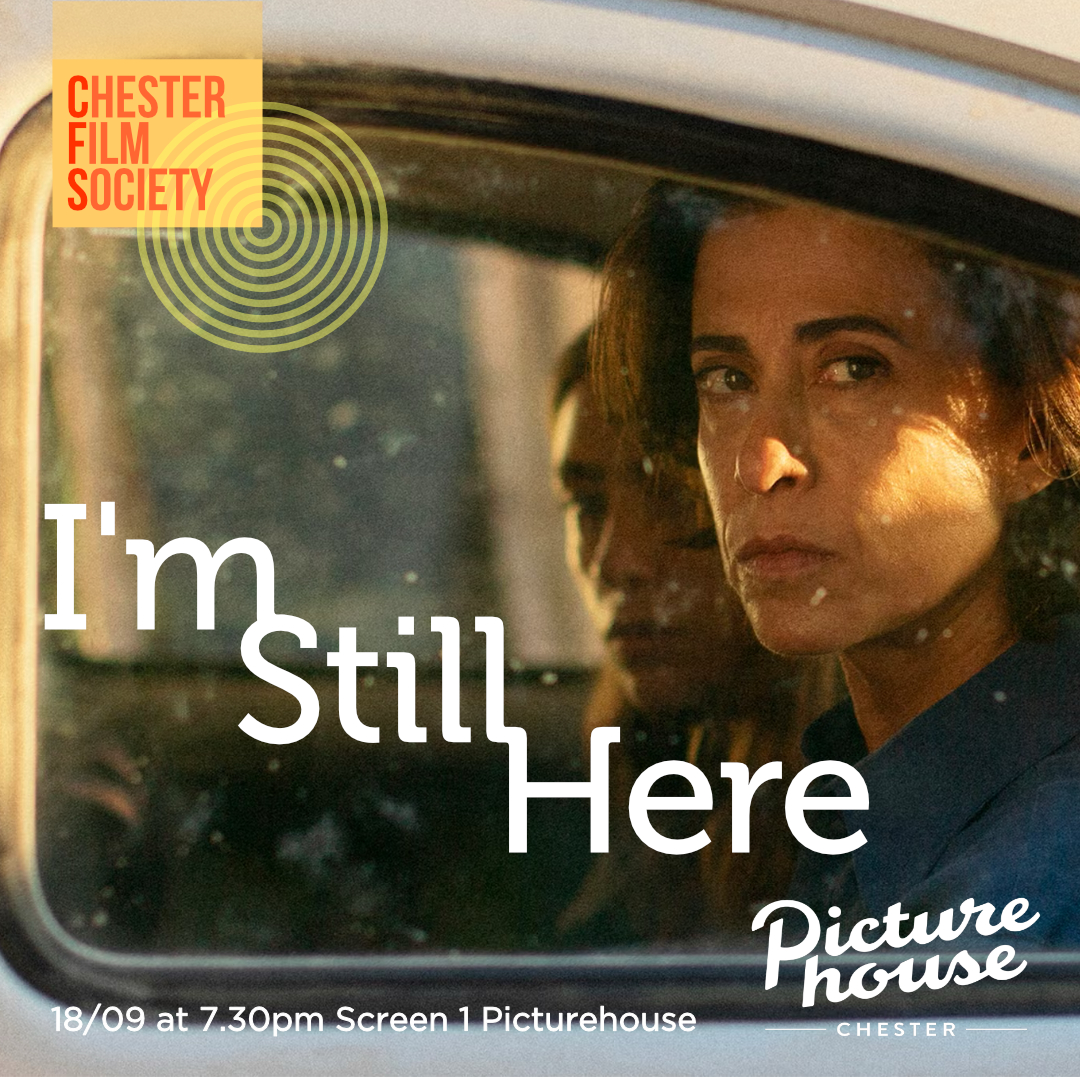
  • I’m Still Here

    I’m Still Here

    Synopsis

    Set in 1970s Rio de Janeiro, I’m Still Here follows the Paiva family—led by Eunice (Fernanda Torres) and Rubens (Selton Mello)—as they navigate the creeping terror of Brazil’s military
    dictatorship. When Rubens, a former congressman secretly aiding the opposition, is abducted by government agents, Eunice must protect her five children while searching for answers in a
    climate of fear and silence. Based on Marcelo Rubens Paiva’s memoir Ainda Estou Aqui, the film dramatizes a true story of resilience, loss, and quiet defiance.

    Context and Craft

    Walter Salles (Central Station, The Motorcycle Diaries) returns to narrative filmmaking with a deeply personal lens—he was childhood friends with the Paiva children and a frequent guest in
    their home. The film’s rich period detail is enhanced by Adrian Teijido’s warm 35mm cinematography and a soundtrack featuring Brazilian icons like Caetano Veloso and Gal Costa. The result evokes a vibrant family life slowly eclipsed by authoritarian violence.

    Critical Reception

    Critics have praised I’m Still Here for its emotional depth and restrained storytelling:

    • “Fernanda Torres delivers a “masterful” performance as Eunice, earning an Oscar nomination for her portrayal of quiet strength under pressure.” The Independent
    • “The film has drawn comparisons to Roma (2018) for its intimate family focus and historical backdrop, though Salles opts for vivid colour and personal memory over monochrome nostalgia.” BFI
    • “While some may feel the film’s minimal political exposition is minimal, its choice to center the victims’ experience, makes the trauma feel immediate and human.” DeepFocusReview
    • “Carried along by Fernanda Torres’ superb performance, I’m Still Here poignantly explores a nation’s upheaval through one family’s search for answers.” Rotten Tomatoes

    Conclusion

    A brave film portraying resistance, not through action, but through endurance. Parallels can be drawn between Brazil’s former dictatorship and its contemporary political climate. The film’s
    use of Super 8 footage and music shapes our emotional connection to the family and their search for the truth.

    Audience Rating: 8.63

    Audience Comments:

    • Excellent; Beautiful film; Powerful; Well acted; Soundtrack good; Sad; Incredible
    • Good and Great choice
    • A beautiful film well portrayed by the amazing characters and well acted
    • A story to be known by all; Emotional but an incredible film